By Angel, Founder, Third Orbit Flora
A Hope for a Greener Future: Combating Climate Change
When we think of 2023, crazy weather patterns and record-breaking climate temperature shifts make the top of the list. The biggest contributor to global climate change by far is industrial emissions from burning fossil fuels, which account for 75% of greenhouse gases and nearly 90% of all carbon dioxide emissions in the atmosphere, according to data from the United Nations.
Although the ideal solution is to stop these emissions, there may be hope of absorbing some of the carbon with trees—and not just the already established forests.
Enter the Mangrove: The “Green Lungs” of Coastal Ecosystems
Mangroves, dubbed “green lungs,” inhabit coastal areas and intertidal waterways across many equatorial tropical and subtropical regions of the world. These mangrove forests are capable of pulling massive amounts of carbon from the atmosphere and converting it through photosynthesis, storing it in the wood mass and roots of the trees.
Though mangroves cover less than 5% of the land on the planet, they sequester four times more carbon per hectare than the Amazon rainforest—and ten times more per hectare than all other terrestrial forests.
The mangroves that have survived deforestation for shrimp farming and overuse by local communities currently hold a staggering 20 petagrams of carbon globally—that’s 44 trillion pounds of carbon. If areas native to mangrove ecosystems were reforested, that number could rise significantly.
“Effective action on climate change will require a combination of emissions reductions and atmospheric carbon removals,” said Jonathan Sanderman of the Woods Hole Research Center in the U.S. “Protecting, enhancing, and restoring natural carbon sinks must become political priorities. Mangrove forests can play an important role in carbon removals because they are among the most carbon-dense ecosystems in the world, and if kept undisturbed, mangrove forest soils act as long-term carbon sinks.”
Mangroves in Focus: Nurturing Biodiversity
But what exactly are mangroves? And why are they important beyond being a carbon sink?
The mangrove genus Rhizophora has an amazing and unique ability to tolerate high salinity (halophyte or halophytic).
Some species block the absorption of salt completely, while others excrete excess salt through their leaves.
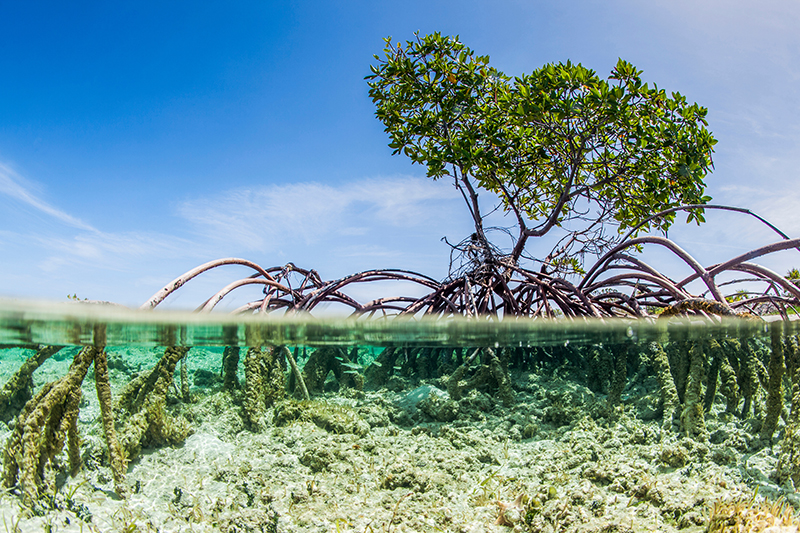
As trees mature, many mangrove species send up pneumatophores—aerial roots that rise above the water. These roots are covered in lenticels, which act as tiny air tubes, allowing the trees to oxygenate in low-oxygen saltwater environments.
Mangroves thrive in various conditions:
- Some straddle the intertidal zone, standing on the edge of dry land or marsh at low tide and being submerged at high tide.
- Others inhabit swamps and brackish river deltas, where their roots remain underwater year-round.
A Habitat for Marine and Avian Life
Mangroves play a crucial role in marine ecosystems. Their roots provide shelter for:
✅ Nursery fish
✅ Mussels, crabs, brittle stars, and more
Above the water, their branches are home to:
🌿 Nesting birds
🌿 Pollinator insects
🌿 Lizards, monkeys, and rare birds like the endangered mangrove hummingbird (Amazilia boucardi)
Stemming the Tide: Mangroves as Coastal Protectors
Mangrove forests are not just carbon sinks and biodiversity hotspots—they are natural defenses against the increasing threats of climate change.
Protection Against Natural Disasters
Mangroves act as natural barriers against:
🌊 Storm surges
🌊 Tidal waves
🌊 Hurricanes
🌊 Coastal erosion
Their sturdy roots and thick canopies absorb wave energy, reducing storm impact on coastal communities. They also:
- Filter pollutants from the water
- Trap sediments, preventing coastal degradation
- Slow sea level rise by gradually building up soil through fallen leaves and organic decay
Where mangrove forests have been removed, destruction from tropical storms and hurricanes is far worse. In the Indo-Pacific, where coastal villages lack mangrove protection, the death rate from major storms is two-thirds higher than in areas where mangroves still stand.
Mangrove Forests: Nature’s Guardian
The urgency of addressing climate change cannot be overstated. Industrial emissions remain the primary driver of global temperature rise, requiring immediate action to reduce them.
Yet, mangrove forests offer a beacon of hope:
🌱 Slowing rising temperatures and sea levels
🌱 Providing vital habitat for biodiversity
🌱 Acting as natural storm barriers for coastal communities
As we navigate the challenges of climate change, restoring and protecting mangroves presents a tangible path toward a more sustainable and resilient future for our planet and its inhabitants.
– Angel, Founder, Third Orbit Flora
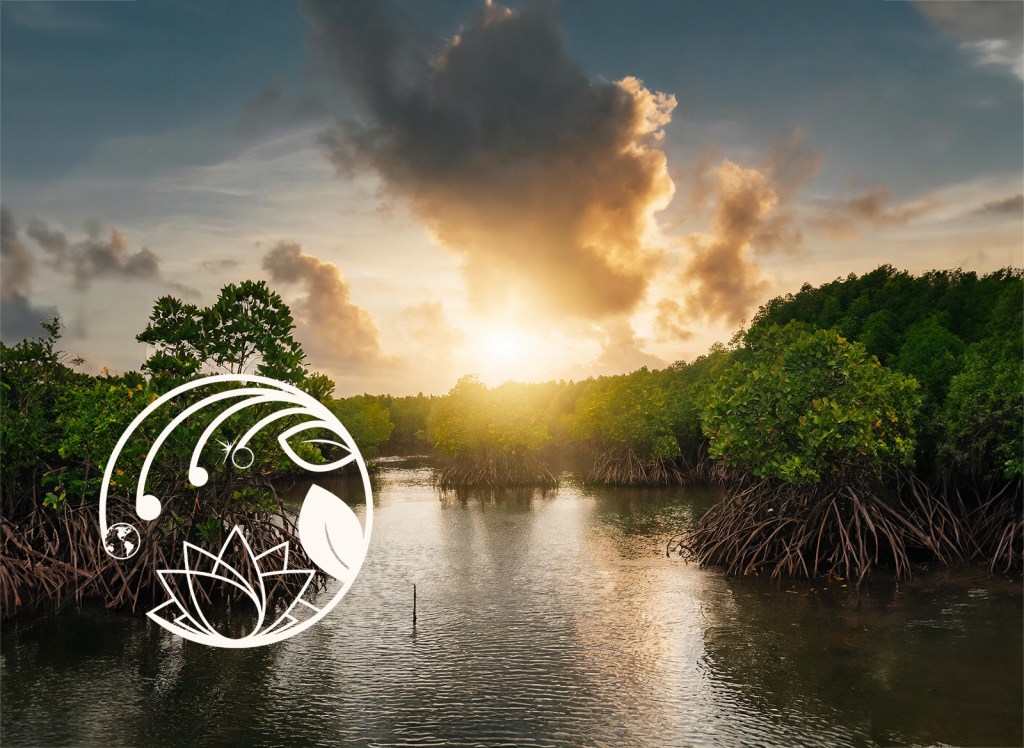
Photo Credit: AI generated image of a Mangrove forest, roots in water, sun rising with clouds in the blue sky; Adobe Stock of Mangrove in Water
To read more about Mangroves, their importance to the earth and how they help mitigate carbon emissions, as well as how carbon is measured, check out the links to the experts who gathered the data below.
Causes and Effects of Climate Change | United Nations
Impacts of Mangroves on Coastline Stability – Alpin Limited
pools, fluxes and a word about units – carbon measurements, University of New Hampshire
New study finds mangroves may store way more carbon than we thought


Leave a Reply